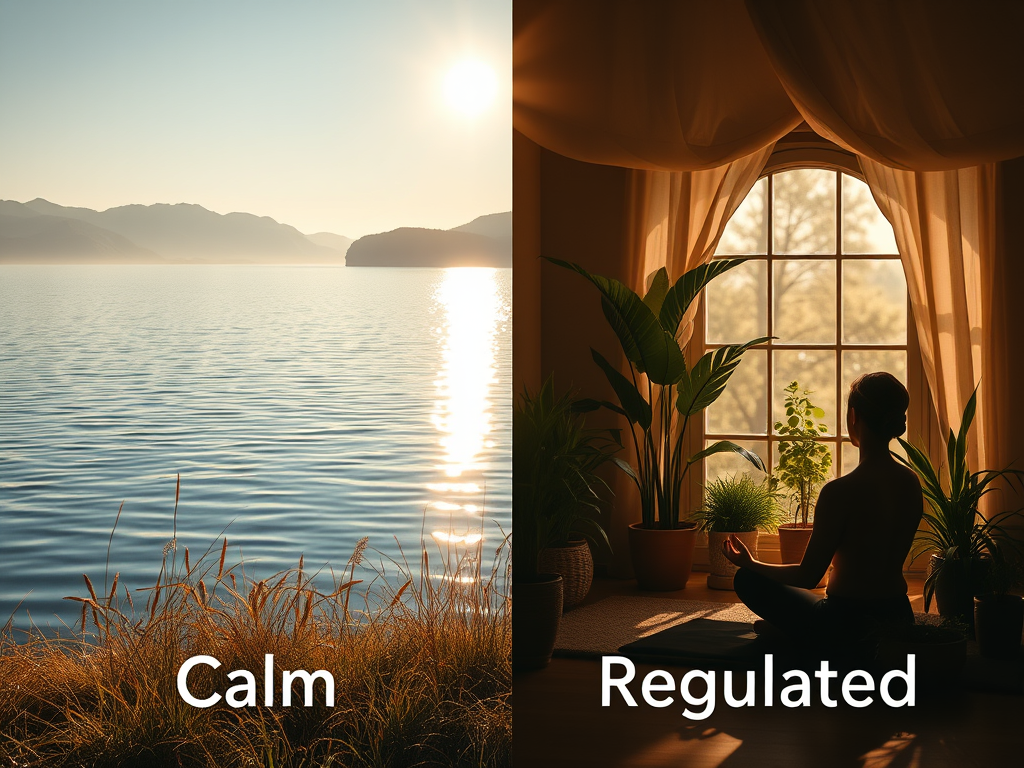
Many people assume that feeling calm and being regulated are the same thing. They’re not.
You can appear calm on the outside while your nervous system is still working overtime inside. You can hold yourself together, stay polite, and function well enough—yet feel exhausted, tense, or disconnected underneath.
That’s not regulation.
That’s coping.
Understanding the difference matters, because mistaking coping for regulation often keeps people stuck in cycles of stress without realizing why relief doesn’t last.
Feeling Calm Is a Momentary State
Feeling calm is often situational. It depends on what’s happening around you.
You might feel calm:
- When no one is asking anything of you
- When conflict is absent
- When you finally sit down at the end of the day
- When you’re alone or distracted
These moments are real, and they matter. But they’re often fragile. As soon as pressure returns, so does tension.
That’s because calmness, by itself, doesn’t mean the nervous system feels safe. It often just means the stimulus has temporarily stopped.
Regulation Is an Internal Capacity
Being regulated is different. Regulation is your nervous system’s ability to move between activation and rest without getting stuck.
When you’re regulated:
- Stress still happens, but it’s recoverable
- Emotions move through instead of overwhelming
- Decisions feel accessible, even under pressure
- You return to baseline more quickly
Regulation isn’t about staying calm all the time. It’s about having resilience within your system.
This is why regulated people can navigate difficult conversations or high-stress moments without completely losing their footing—even if they still feel emotion.
Why Coping Only Goes So Far
Coping strategies often focus on managing symptoms rather than restoring safety.
Distraction, numbing, over-functioning, or staying busy can all create temporary relief. But if the nervous system never receives clear signals of safety, stress accumulates beneath the surface.
Over time, this can look like:
- Sudden emotional overwhelm
- Decision fatigue
- Irritability without a clear cause
- Difficulty resting, even when you try
This isn’t because coping tools are wrong. It’s because they’re incomplete without regulation.
Regulation Brings a Deeper Kind of Calm
Regulated calm feels steadier. Less forced. Less fragile.
It shows up as:
- A softer internal pace
- More tolerance for discomfort
- Clearer thinking under stress
- Less urgency to fix, explain, or control
This kind of calm isn’t dependent on everything going well. It comes from a system that knows how to recover.
And that recovery can be trained.
Building Regulation Over Time
Regulation isn’t achieved through one technique or insight. It’s built gradually through consistent signals of safety.
That might include:
- Slowing transitions throughout the day
- Supporting the body before addressing the mind
- Reducing pressure to “handle everything”
- Creating rhythms that allow recovery
When regulation increases, calm becomes more accessible—not because life is easier, but because your system is steadier.
A Practical Place to Start
If you’re realizing that you’ve been coping rather than truly regulated, you’re not behind. You’re becoming aware.
I created 7 Days to More Energy, Calm & Balance to gently support nervous system regulation in everyday life—without forcing calm or bypassing stress.
It’s designed to help you build the kind of steadiness that lasts beyond quiet moments.
👉 Download 7 Days to More Energy, Calm & Balance
Pair With These Wellness Favorites
- Celery Juice for Glowing Skin
- My Go-To 5-Minute Morning Mindfulness Ritual
- Simple Natural Pantry Staples Every Mom Needs
- Heavy Metal Detox Smoothie Recipe
✨ Want more natural wellness tips? I’m here to support your journey, schedule an integrative wellness session today.
*This post may contain Amazon affiliate links. As an Amazon Associate, I may earn a small commission if you purchase through my links—at no extra cost to you. Thank you for supporting Simple Mom Wellness.
Leave a Reply